


The top 50 TV shows that define the American experience
The top 50 TV shows that define the American experience

Kelly Lawler, USA TODAYMon, June 29, 2026 at 9:01 PM UTC
0
As of July 14, 2026, America has been around for 250 years. And for 80 of those years, we've all been watching TV.
While the story of our country is being told in a myriad of ways in celebration of this anniversary, one way to look back is to see how the medium of television − and the shows, stars, trends and events it created − has become a part of our national narrative. We may not all agree on politics or social issues, we may live across thousands of miles of land and sea, and we may be fundamentally different from each other, but we all watch TV. And it's worth reflecting on how all those shows have come to underline our collective experience.
How do you define what shows capture all the many disparate things about a melting pot of a country? Well, there are a few categories we considered for this list. Firstly, there are the shows that depict quintessentially American moments and events. There are great documentaries about our history, news programs that have told the story of that history in real time and sitcoms that have opened the eyes of one part of our society to another. The second category of shows we have included are the shows that brought Americans together via our TV screens, whether they were about 20-somethings in New York City or feuding wealthy families in Texas. There are the shows where our values and obsessions were shown (and shaped) by what was on our screens.
And most ephemeral but perhaps most affecting were the shows that say something about our country and culture through their nuanced and often allegorical storytelling. These are the shows that capture our post-9/11 paranoia through science fiction, or the fear of economic collapse through the zombie apocalypse, or our obsession with individuality through 1960s advertising.
Many of the shows on this list exemplify some or all of these categories. We may have only been creating and watching TV for a little over 80 years, but with the wealth of transcendent shows Americans have made in that time, it truly feels like there are 250 years worth of history crammed into the stories we tell on a small screen.
Presented in chronological order, here are USA TODAY's picks for the 50 TV shows that have defined the American experience.
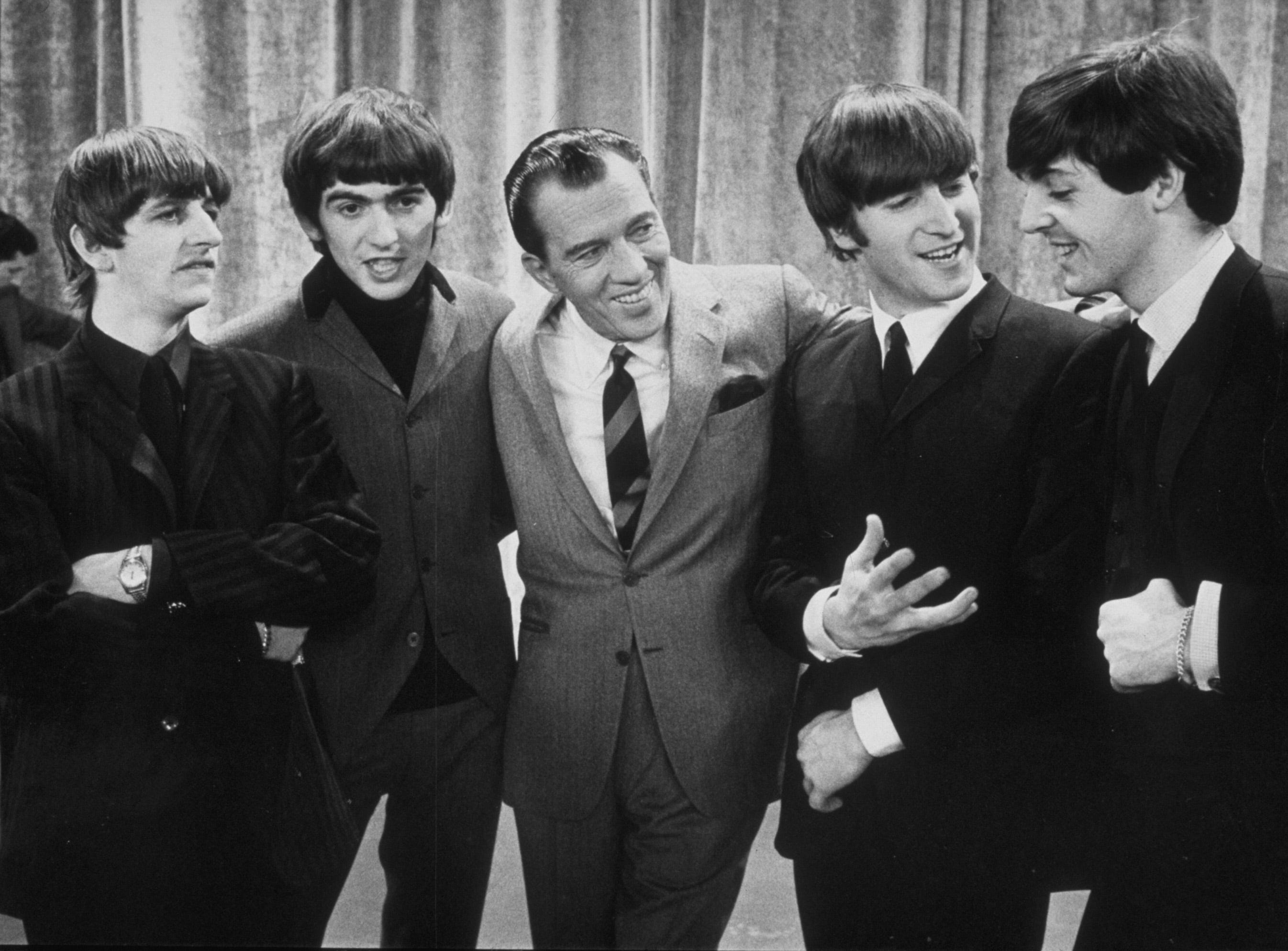
“The Ed Sullivan Show” (CBS, 1948-1971)
Variety and talk were the name of the game when TV first became entertainment in the United States, and nobody did it better than good, old Ed. “Ed Sullivan” wasn’t just good TV; it was TV that changed the course of our popular culture. Just ask The Beatles.
“I Love Lucy” (CBS, 1951-1957)
It’s a bit of a generalization, but a true one nonetheless, to say America’s love affair with television was cemented by Lucille Ball and Desi Arnaz in this sitcom that aired 180 episodes in the 1950s. The story of the goofy, lovable couple and their normal, middle-class lives was mesmerizing and revolutionary when it aired on TV, the first show filmed on actual film in front of a live studio audience. The real-life couple had (unsurprisingly) fantastic chemistry and comedic timing that made the show electric then and now. It remains one of the best TV shows ever made, helping kickstart our national obsession with a quaint little box in our living rooms.
"Guiding Light" (CBS, 1952-2009)
Before TV entertained and informed the American public, radio was the technological innovation that brought us together through storytelling. Many early TV shows originated as radio serials, before making the jump to the small screen, particularly soap operas, one of the oldest genres on TV. Quintessential soap "Guiding Light" may have first premiered on TV in 1952, but its radio history goes back to 1937. Soaps like "Light" helped define what we came to expect from our shows: Big characters, twisty plots, melodrama and long-form storytelling.
“Today” (NBC, 1952-present)
The first morning show is still the most-watched morning show, still the cheery, sunny faces that millions of Americans wake up to each day. News, sports, weather, interviews, performance, talk, gossip − "Today" has and had everything crammed into a few hours on weekday mornings. The series has weathered controversy, tragedy, crime and grief from its hosts, who are positioned as intimate members of our own families as they read the news, narrate sports or fill us in on the forecast. Now hosted by Savannah Guthrie and Craig Melvin, the hosts of "Today" have been stewards of 70 years of our country's history and culture.
“The Tonight Show” (NBC, 1954-present)
What Steve Allen began in 1954, Jimmy Fallon (and Jimmy Kimmel and Seth Meyers and John Oliver and John Stewart) are trying to keep alive in 2026. The world’s longest-running talk show, NBC’s late-night institution created the late-night format, which was perfected and solidified by the late-great Johnny Carson’s 1962-1992 tenure. While late night is fading in modern times (as the recent end of “The Late Show with Stephen Colbert” on CBS has proven), there was a period of the 20th century in which Carson was putting us to bed every night, with warm humor sprinkled with spice and flair. The show helped create our modern image of the celebrity interview, of stand-up comedy and the way in which we experience the news of the day through our TVs.
“Leave It to Beaver” (CBS and ABC, 1957-1963)
If Lucy and Desi made up the American family that created our love for television, “Beaver” was the television that created our obsession with the American family. The show about the white-picket fence Cleaver family and their troublesome son created a foundational image of post-war Americana that has been so influential, the show’s title is a shorthand for this era of conservative nuclear family values. While it was never a massive hit when it aired, its popularity in reruns and our cultural lexicon have made it live on far beyond its initial run.
“Star Trek” (NBC, 1966-1969)
It may seem shocking 60 years after Gene Roddenberry's hopeful and savvy vision of the future created a science fiction phenomenon, but the original "Star Trek" series starring William Shatner and Leonard Nimoy only lasted three seasons on NBC. But a television show doesn't have to be long-running or highly-rated to be intimately woven into the fabric of our country, and "Star Trek" won over the populace in a six-decade campaign that includes dozens of TV shows, films, games and books. More than anything else, "Star Trek" is responsible for its role (alongside musical and movie acts of this era) in creating the modern idea of a "fan," of a story so captivating, emotional and important to its audience that it becomes a part of their very identity. Now we are a country of fans, some dubbed as "cultish," of musical artists, movie franchises, TV series and even politicians.
“60 Minutes” (CBS, 1968-present)
There have been a slew of evening news magazines that have helped Americans understand the world they live in, changed the course of history and become the news themselves over the long history of broadcast journalism, from Edward R. Murrow taking on McCarthyism on "See It Now" to Walter Cronkite bringing The Vietnam War to Americans' homes on "CBS Evening News." "60 Minutes" is one of the few shows still on the air, still keeping the stoic, clinical tone to the act of reading the news. It remains a ratings champ, resistant to tabloid and other trends and still influential enough that its recent behind-the-scenes turmoil has become national news.
“Jeopardy!” (NBC and syndication, 1964-present)
TV is often called "the idiot box," criticized for mindless distraction and entertainment. But there is a long tradition of intellectualism and education on our screens that represents the American desire to learn and innovate: The quiz show. The longest-running and most prestigious of them all is "Jeopardy!," an American institution that never ceases to capture our spirit and desire for knowledge.
“The Mary Tyler Moore Show” (CBS, 1970-1977)
Groundbreaking, thoughtful, impactful and just darn funny, Mary Tyler Moore's eponymous sitcom about a single career woman is the defining show about American second-wave feminism. It's also one of the greatest shows ever to grace our screens.
“Sesame Street” (PBS/HBO Max/Netflix, 1969-present)
Kermit, Big Bird, Elmo, Cookie Monster − these are the fluffy, lovable characters that have shaped the minds and imaginations of American children for over 50 years. How Americans see childhood has changed greatly over our long history, and "Sesame" has captured our (relatively recent) desire to preserve the magic of youth for our children, while making sure they grow into smart, kind and resilient adults.
“All in the Family” (CBS, 1971-1979)
Norman Lear, legend of the small screen, did one thing better than any other TV producer then or since: Opened our eyes to parts of America we hadn't seen before. Of all his brilliant shows, "Family" exemplifies this broadening of our collective horizons through its diverse characters: close-minded Greatest Generation patriarch Archie (Caroll O'Connor), the Black Jeffersons next door and counterculture poster boy Meathead (Rob Reiner).
“M*A*S*H” (CBS, 1972-1983)
The classic sitcom set at an army hospital during the Korean War lasted far longer than that conflict it portrayed. A snapshot of the 1970s culture and humor (though it took place in the 50s), the deeply funny and popular series was both a show about America and one that brought us together: 106 million people tuned into the finale episode. These days only the Super Bowl can bring that many viewers together.
“Little House on the Prairie” (NBC, 1974-1983)
Some TV shows reflect the truth of our history, and some reflect the stories we tell ourselves. "Prairie," based loosely on the semi-autobiographical book series by Laura Ingalls Wilder, is purportedly a historical drama about life on the American frontier in the late 19th century. But what it really is is a fantasy story, an idyllic, white-centric and often happy-go-lucky version of a very dark period in our history. The show occasionally dipped its toes in the murkier waters of prairie life (including episodes about poverty, disease and bigotry), but ultimately presents a warm and nostalgic story to a public who loved stories of hard-working frontiersmen pulling themselves up by their bootstraps.
“Happy Days” (ABC, 1974-1984)
Nostalgia was and is a dominant force in our cultural storytelling, and it wasn't just the distant past of "Prairie" for which Americans were yearning. The Fonz (Henry Winkler), Richie (Ron Howard) and the rest of the "Happy" gang created a quaint and rocking version of the 1950s that radiated warmth and community. Even as the series (literally and figuratively) "jumped the shark" in its later seasons, "Days" was one of the best shows that represents the stories we tell ourselves about ourselves.
“Saturday Night Live” (NBC, 1975-present)
The counterculture of the Baby Boomers came roaring onto TV with Lorne Michaels' sketch comedy series that has been an institution on NBC Saturday nights for 51 years. "SNL" has always tried (with mixed success) to capture the current American moment, from its many presidential impressions to our collective reaction to the Sept. 11, 2001 terrorist attacks. And it's always made us laugh.
“Roots” (ABC, 1977)
America has never tuned in to TV the way we tuned into "Roots," a blistering miniseries about American slavery that aired for eight nights in 1977, with more than half of the entire population tuning in: an estimated 130-140 million viewers. And how could we look away? There are few parts of American history that are as important to our narrative and the way we live now than slavery, and few stories have ever captured the realities and brutalities like "Roots."
“Dallas” (CBS, 1978-1991)
Who shot J.R.? In 1980, there was only one question on Americans' minds as the cliffhanger of the third season of "Dallas" was unresolved. "Dallas" (and "Dynasty") helped usher in an era of "nighttime soaps," deeply serialized melodramas with big twists and turns, and you can draw a direct line from J.R. Ewing to ABC's "Desperate Housewives" or even Paramount's "Yellowstone." It's also a telling fantasy about the time period: in our "greed is good" Reaganomics era, the lifestyles of the rich and famous were one of the biggest names in TV.
"Cheers" (NBC, 1982-1993)
The place where everybody knows your name is a direct foil to the likes of "Dallas" (and so is "Roseanne," more on that below). Working class, sassy, urban, East Coast and wry, the crew of Boston's bar was everything the "Dallas" characters weren't, but we still couldn't stop watching them.
“The Cosby Show” (1984-1992)
Bill Cosby may have a sordid reputation in modern times, but in the 1980s, his TV show was a revolutionary and subversive representation of Black Americans as middle class, educated and "just like everyone else." Hugely popular and influential, TV and America would not be the same without it.
“The Oprah Winfrey Show” (Syndication, 1986-2011)
Is there a non-politician celebrity who has shaped America as much as Oprah Winfrey has? It's hard to argue that there is anyone bigger and more influential, and it all started for her with a talk show that did everything from launch future conservative health personality Dr. Oz, to get Americans reading, to giving away cars to nearly ruin Tom Cruise's career. Winfrey pops up now and again for major TV interviews (like with Harry and Meghan post-break from the royal family), but we will never recreate the marvel of her weekly series.
“Roseanne” (ABC, 1988-1997)
True working-class America is not shown on our TV screens enough because it's both a deeply important representation and a wonderful well of great storytelling. "Roseanne" is the definitive white working-class narrative (keeping to its original run and ignoring its controversy-ridden revival), unafraid to show the realities of living paycheck-to-paycheck and the humanity and community that these people had.
“Seinfeld” (NBC, 1989-1998)
The show about nothing was actually everything to many Americans watching at home. A misanthropic view of adulthood with a satirical bent to its humor, Jerry Seinfeld and Larry David's sitcom was like nothing else on TV at the time it premiered. It was hugely popular and one of the first hugely disappointing phenomenons, as its much-derided finale proved TV could make us as angry as it could make us joyful.
Advertisement
“The Simpsons” (Fox, 1989-present)
The Springfield of Fox's long-running adult animated satire is purposefully the Springfield of every state in America. A parody of stereotypes about Americans (Homer Simpson is the dull-witted, gluttonous American many Europeans deride), "Simpsons" is also a deeply clever show that has captured the mood of the many eras in which it has aired.
“The Civil War” (PBS, 1990)
Documentarian Ken Burns has been described as the voice of America, and for good reason. Impartial, fact-finding and without pretension, Burns turns his camera to our history in a sober-but-not-boring manner. His many films and series about our wars are deeply affecting, from "The Vietnam War" to a recent look at "The American Revolution" (in honor of America's 250th anniversary, just like this story), but "Civil War" remains his masterpiece. Like "Roots," it forced Americans to reckon with all the crimes and recriminations that have led to our current prosperity.
“Beverly Hills 90210” (Fox, 1990-2000)
Like adults and young children, teenagers yearn to see their stories told, and teen and high school TV has been a thriving genre ever since "Happy Days." But no show captured the teen experience more intimately before "90210," which is half wealth fantasy and half soapy melodrama. Like the real lives of American teens, the show made the everyday problems of high school and teen relationships feel like life and death, giving a gravitas to adolescence desperately needed.
“Law and Order” (NBC, 1990-2010, 2022-present)
From our very founding, Americans have considered our country one of law and order, of right versus wrong and justice versus injustice. "Law and Order" is a comforting confirmation of what many see as the inherent justice in the American system of policing and courts. The cops and prosecutors are the good guys. The murderers are the bad guys. There is very little room for areas of gray and nuance. There is plenty to criticize in this worldview, especially as stories of bad actors within the criminal justice system come to light, but there is no denying "Law" shows a perspective many Americans believe to be fundamentally true.
“Jerry Springer” (Syndication, 1991-2018)
As much as it might make us cringe to remember, tabloid TV is a huge part of American culture, particularly from the 1990s-2000s. The precursor to reality trash TV (think MTV dating shows in the early aughts and "Love Is Blind" today), tabloid TV thrived by showing the worst of humanity doing horrible things, and nobody represents this more than controversial talk show host Jerry Springer. His "Too Hot for TV" brand expanded what we as a culture felt was acceptable to look and leer at. Sure, many people openly disdained Springer and his ilk, but the ratings didn't lie: People were watching. And they were hungry for more.
“Friends” (NBC, 1994-2004)
For 10 years, America was nothing without our "Friends." The attractive and magnetic six-some of Monica (Courtney Cox), Rachel (Jennifer Aniston), Phoebe (Lisa Kudrow), Ross (David Schwimmer), Joey (Matt Le Blanc) and Chandler (Matthew Perry) created a phenomenon drinking giant cups of coffee in their shiny corner of New York City. Goofy, charming, romantic and funny, "Friends" represented a silver-lining view of Generation X (directly contrasted with cult film "Reality Bites") that spawned a thousand imitators that never captured our hearts in quite the same way.
"The O'Reilly Factor" (Fox News, 1996-2017)
Fox News was and is the most influential 24-hour news network on American TV, representing a conservative point of view to a huge audience. Of its many popular and consequential shows, none represent the highs and lows of the network better than Bill O'Reilly's opinion hour, once a massive force in the ratings and the opinions of its viewers, that was canceled in disgrace after its host and the network settled sexual harassment lawsuits.
“The View” (ABC, 1997-present)
For almost 30 years, "The View" has been the place where American trends, culture and politics have been interrogated and adjudicated from the far left to the far right. The same show that seemed vital to our society when it first premiered is making headlines for an interview with current Vice President JD Vance just this month.
“The Daily Show” (Comedy Central, 1996-present)
The original "Tonight Show" created the late-night genre centered around comedy, celebrity culture and topical humor. "The Daily Show," particularly when hosted by Jon Stewart from 1999-2015 (and currently on Monday nights) pushed the genre into the territory of searing political humor and commentary.
“South Park” (Comedy Central, 1997-present)
If "The Simpsons" showed that animation was a fruitful genre for satire and commentary, "South Park" was the show that proved it could be an explosive and excruciating reflection of modern life. Trey Parker and Matt Stone created a show directly informed by millennials and Gen Xers growing up in a culture of gun violence, fear, moralizing, bigotry, war and division. It may be extreme, but it is also sometimes deeply affecting.
“The West Wing” (NBC, 1999-2006)
"Wing" is the first of a few series actually set in the world of American politics to make this list, which are inherently stories we tell ourselves about our current morals, values and priorities. This Clinton-and-Bush-era drama was defined by hopefulness and patriotism, by a fundamental belief that a small group of well-intentioned and smart individuals could change the world.
“The Sopranos” (HBO, 1999-2007)
David Chase's story of organized crime families in New Jersey changed what Americans expected from their TV screens, and how prestigious the medium was in our culture. Movies, a cinematic experience with great auteurs and international acclaim, were seen as far more prestigious than television, despite the latter's much larger audience. That all changed with "The Sopranos," award-winning, beloved and just as "prestigious" as any French film. We'd get a dozen or so copycat shows about complicated anti-heroes (including "Breaking Bad" and "Mad Men," more on the latter below), but we won't stop believing about the effect "Sopranos" had on American TV.
“The Wire” (HBO, 2002-2008)
Crime, justice, policing, corruption, poverty, desperation, drugs, grief, loss: HBO's seminal "The Wire" had it all and more. Often considered the greatest TV show of all time (including by this TV critic), "Wire" is the most important and accurate series about our often-imperfect criminal justice system, and all the machinations on both sides of the law.
“American Idol” (Fox and ABC, 2002-2016, 2018-present)
Reality TV, and reality TV competitions, are just another genre in 2026, but in the early 2000s they were a revolutionary development in what TV could be. CBS's "Survivor" kicked off the competition genre specifically in 2000, but it exploded with "Idol" in 2002. A perfect amalgamation of American obsession with celebrity, TV, music, bullying, Cinderella stories and democracy, the zeitgeist dominance of the early years of "Idol" can not be emphasized enough to anyone who wasn't there to see it.
“Angels in America” (HBO, 2003)
Queer representation on TV has a long and varied history, from stereotypes to groundbreaking portrayals. "Angels" is both an example of that historic representation and important LGBTQ+ history, an allegorical and fantastical story of the 1980s AIDS epidemic in New York City.
“NCIS” (CBS, 2003-present)
There are good guys and bad guys in the world of "NCIS," and the good guys represent everything America valued when it premiered in 2003. In the Iraq War era, when cars all over the country bore yellow "support our troops" ribbons, "NCIS" glorified our military, sense of justice and American exceptionalism in the precise way to meet the moment.
“Chappelle’s Show” (Comedy Central, 2003-2006)
In more recent decades, TV has greatly expanded in perspectives and diversity, and by the early 2000s, the Black experience on TV was no longer a monolith. Enter comedian Dave Chappelle, whose Comedy Central sketch comedy show, which handled race and racism so casually but with such nuance it launched an era of satirical comedy that managed to go deeper than ever before and open its viewers' eyes to yet more new worlds and cultures.
“Battlestar Galactica” (Syfy, 2004-2009)
Although it takes place in faraway time and place, Syfy’s remake of the 1970s space opera ends up as the most potent and prescient post-9/11 show on TV. While series like “24” more literally took on American fears about national security, terrorism and “otherness,” “Galactica” was one giant metaphor for our Patriot Act panic, for our tribalism and willingness to use violence as a means to an end. The story of humans fighting a robot race bent on the former’s destruction ends up being a microscope on the national mood of the 2000s, and that’s a phenomenal achievement.
“Grey’s Anatomy” (ABC, 2005-present)
The medical TV drama is one of the biggest genres on TV ever, and the longest-running entry is ABC's reliable melodrama set in a Seattle hospital. The show represents a milestone in American TV, when showrunners like Shonda Rhimes began to become famous names in and of themselves, and create whole dominions of TV shows on networks and streaming services. Rhimes' stories push our preconceived perceptions about gender and race, particularly in the way we view Black women.
“Mad Men” (AMC, 2007-2015)
One of the hallmarks of the United States' mythology is "rugged individualism," our cultural obsession with personal responsibility and achievement. AMC's acclaimed drama set in the 1960s advertising world is an ode to individualism, even when it is deeply destructive and selfish. Don Draper (Jon Hamm) is extreme, but he is all of us in his self-centered pursuit of power and pleasure, no matter who he hurts along the way.
“Keeping Up with the Kardashians” (E!, 2007-2021)
While certainly not ending up on any lists of the best shows of American history, “Kardashians” is the best representative of our relationship to celebrity as it evolved in the 21st century. No longer the gods and goddesses of mid-century Hollywood nor even separated by the distance of journalistic profiles, “Kardashians” represented an intimacy with famous people Americans began to crave as the tabloid culture moved from magazines to TV. That the family was famous for, well, being famous, opened the door to new types of celebrity and celebrity worship. And they’ve reaped the benefits: Kim Kardashian has amassed $1.9 billion.
“Parks and Recreation” (NBC, 2009-2015)
The next series on this list represents cynical American politics, but NBC's sweet sitcom is the definition of hopeful, cooperative political experience. What other show could feature cameos from both Joe Biden and John McCain? Never as popular as similar NBC workplace mockumentary "The Office," "Parks" managed to capture something truthful about America nonetheless.
“The Walking Dead” (AMC, 2010-2022)
After the 2008 financial crisis and subsequent Great Recession, for many Americans it felt like the world was ending. When we tuned into dark and dismal zombie apocalypse drama "The Walking Dead," we got to actually watch the world end. Allegorical and riveting (particularly in its higher-quality early years), "Dead" was not just a fantasy; it was a catharsis for our worried and tired lives in economic and political uncertainty.
“House of Cards” (Netflix, 2013-2018)
When this dark, cynical and addictive drama debuted on Netflix in 2013, it marked a new beginning in our country and in the world of TV. Netflix’s first bona fide streaming hit, “Cards” is the spark that has reshaped television, to the point where 12 years later marked the milestone in which more Americans were watching streaming television than cable TV. The show also brought us firmly away from the hope and optimism politics of “The West Wing” and Barack Obama’s early presidency into the nasty, scorched earth electioneering and governance that would kick off in the 2016 presidential election.
“OJ: Made in America” (ESPN, 2016)
The story of O.J. Simpson is, as the title of this both Emmy- and Oscar-winning documentary suggests, the story of America. No piece of art since “Roots” has so well captured the story of Black Americans and the racism they have faced, but “OJ” is firmly rooted in the chaotic events of 20th Century American history. The way the filmmakers, and their complex subject, craft a story at the intersection of race, history, celebrity, sport and justice is transcendent and unforgettable.
“The Handmaid’s Tale” (Hulu, 2017-2025)
The debut of Hulu’s adaptation of Margaret Atwood’s seminal feminist dystopian parable coincided with Donald Trump’s first presidency, and the two cultural moments can never be separated. The show, about a world in which women have been stripped of all rights, became a symbol for progressive and left-wing movements, with the iconic red-and-white “handmaid” costume showing up at political protests. The show’s title is synonymous with the fears of many Americans, who navigated and are still navigating a divided political nation.
“The Pitt” (HBO Max, 2025-present)
It’s not an exaggeration to say that HBO Max’s Emmy-darling is the best show about “the way we live now.” Debuting in 2025 and not missing a beat in its 2026 second season, the medical drama is the very first TV show to capture the post-pandemic era of America. Yes, it tackles big political and social issues like ICE, vaccines, masking, abortion, health insurance and racial tension, but it also perfectly captures our national sense of burnout and dread, of waking up after we’ve all learned that the world could change and stop on the heels of a virus or a war. For Americans whose lives feel like one long shift in the ER, “The Pitt” was made for our catharsis.
This article originally appeared on USA TODAY: 50 TV shows that define American history for its 250th anniversary
Source: “AOL Entertainment”
