


Why Ridley Scott Says ‘What’s on Paper’ Is the Most Important Part of Making a Movie (Exclusive)
Why Ridley Scott Says ‘What’s on Paper’ Is the Most Important Part of Making a Movie (Exclusive)

Lily BrownFri, August 28, 2026 at 4:00 PM UTC
0
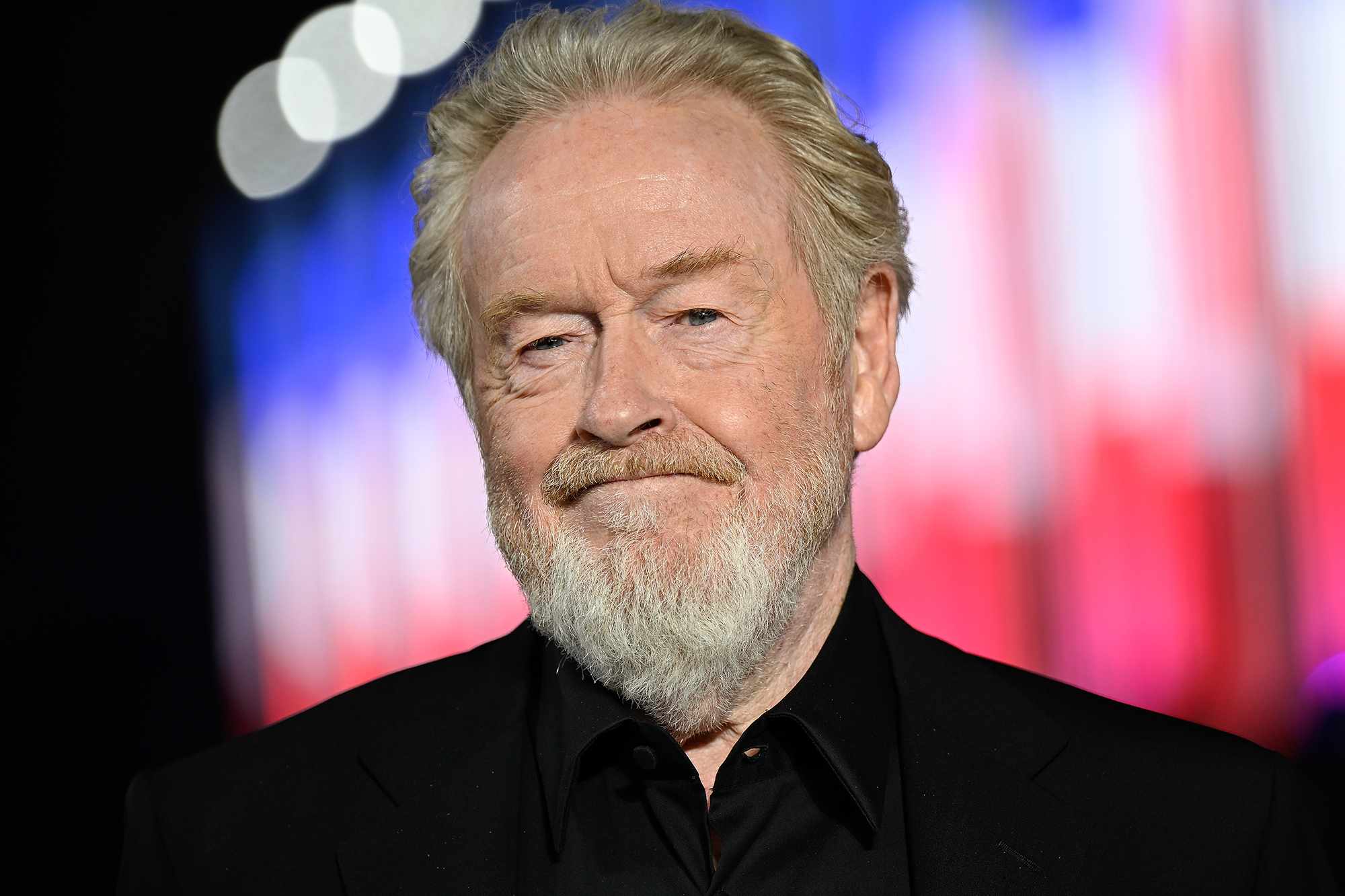
Ridley Scott attends the ‘Napoleon’ UK Premiere at Odeon Luxe Leicester Square on November 16, 2023Credit: Gareth Cattermole/Getty -
Ridley Scott adapted Peter Heller’s novel The Dog Stars by focusing on preserving the story’s core elements
The post-apocalyptic tale explores themes of loneliness and survival without relying on zombies or elaborate mythology
Scott says the relationship between the main character and his dog was crucial to capturing the novel’s emotional depth
Adapting a beloved novel means making hundreds of decisions about what belongs on screen — and what is too important to leave behind.
For Ridley Scott, the answer begins before a camera ever rolls.
The legendary director, 88, has spent decades creating some of cinema’s most memorable worlds, from dystopian futures to otherworldly landscapes. But in bringing Peter Heller’s post-apocalyptic novel The Dog Stars to the screen, Scott says the most important thing isn’t the scale of the production or the world he can build around it. It’s the story underneath it all.
Rather than treating the book as a jumping-off point for a new vision, Scott was interested in identifying what made the story work in the first place — and making sure those elements survived the journey from page to screen.
“It’s all about what’s on paper before you begin,” Scott tells PEOPLE. “If you’ve got a film on paper, then fundamentally, that’s it. That’s the most important, significant thing you can have.”
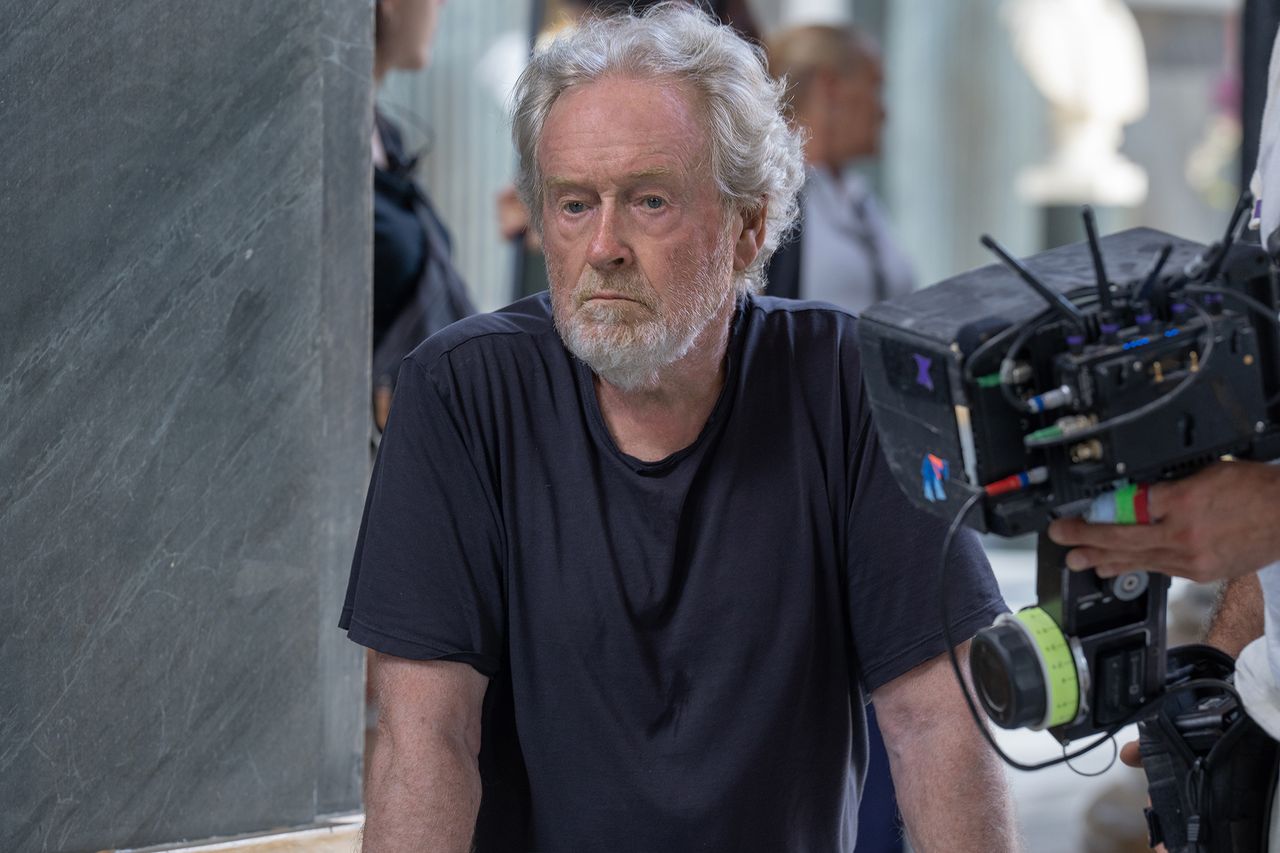
Director Ridley Scott on the set of ‘Gladiator II’Credit: Paramount Pictures
Scott first encountered The Dog Stars as a screenplay that came through Fox, where he has had a first-look deal for roughly two decades. He hadn’t read Heller’s novel before the script landed in front of him. But he quickly sensed there was something special about the material.
“I can tell within a page or two, I’m in good hands,” he says. “You kind of know. It’s the beat, the rhythm, the name he calls the people.”
Need your next page-turner? See which books our editors can’t put down with our People Who Read newsletter — plus get PEOPLE News.
Before Scott could decide what the movie should look like, he had to understand what was already working in Heller’s story.
The novel is set after a devastating pandemic has wiped out much of civilization. Hig, a pilot, lives in isolation with his dog and his volatile survivalist neighbor, Bangley. The setup could easily lend itself to a spectacle-heavy survival movie, but Heller’s novel is interested in something quieter.
Advertisement
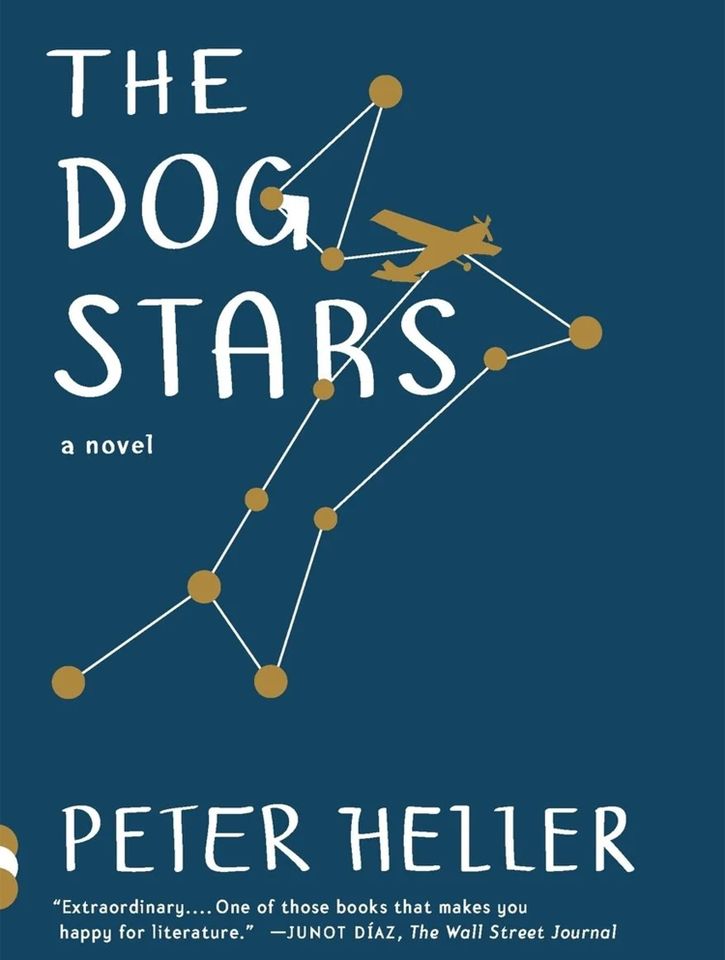
Cover of the book ‘The Dog Stars’ by Peter Heller featuring a constellation design with an airplane silhouetteCredit: Penguin Random House
The book spends as much time with Hig’s memories and loneliness as it does with the dangers outside his makeshift refuge. Its post-apocalyptic setting isn’t simply an excuse to imagine a ruined America; it’s a way of stripping away the distractions of ordinary life and asking what remains when nearly everything familiar is gone.
That balance, between the size of the world and the intimacy of the story, is familiar territory for Scott. He has made films set in worlds that are almost impossibly elaborate, but for him, the premise still has to work before the production design, visual effects or spectacle can take over.
“The end of the world would be the universe of a tin can called a spaceship. And the universe on that ship is seven people. The one person you don’t realize is a company person is also an AI. And worse, they land on another world and encounter a border monster. So that’s one kind of universe, right?”
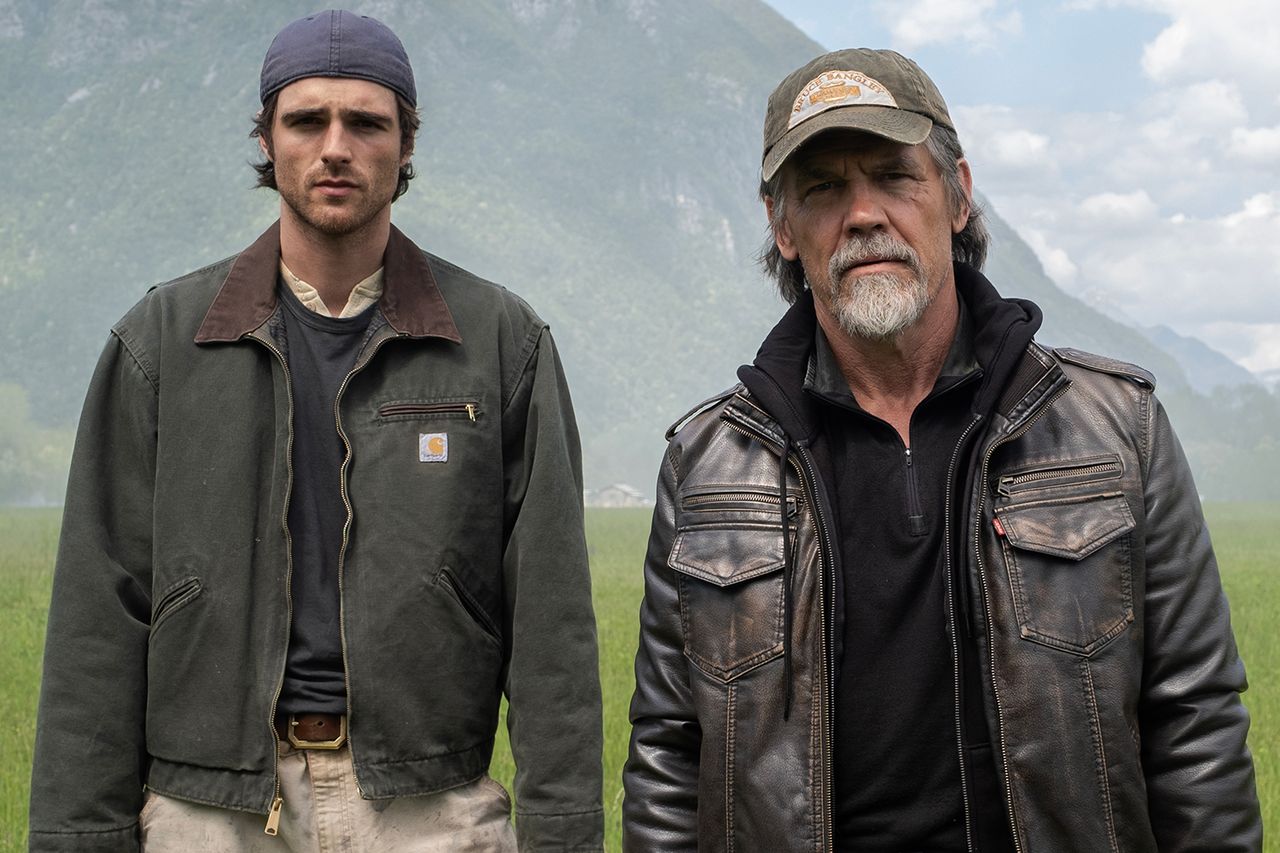
Jacob Elordi as Hig and Josh Brolin as Bangley in ‘The Dog Stars’Credit: Fabio Lovino/20th Century Studios
With The Dog Stars, however, Scott wasn’t looking to reinvent Heller’s premise. He was drawn to the logic of it. The catastrophe in The Dog Stars doesn’t depend on zombies, monsters or an elaborate mythology. Its horror comes from how recognizable the collapse can feel — and from the possibility that ordinary life can disappear much faster than anyone expects.
“All I felt was looking at the logic of it all,” he says. “There inevitably will be [consequences], were this to occur and God forbid, it shouldn’t.”
That grounded quality also makes the book’s smallest details more meaningful. In Heller’s world, when food, safety and human contact have become precious, relationships take on an almost physical weight. And for Hig, perhaps the most important relationship is with his dog, who represents his connection to the life he had before the pandemic, and especially to his late wife. Preserving that relationship was another way of keeping what was already working on the page for Scott.
For the director, that is what makes the story worth bringing to the screen.
“It’s tough, but the more you do it, I don’t think the easier it gets, but somehow you get more comfortable with this idea of making up a story,” he says.
The Dog Stars is in theaters this Friday, Aug. 28. Heller’s The Dog Stars novel is also available for purchase.
on People
Source: “AOL Entertainment”
