


'It’s been done to us': Ohioans fight data centers, from a former uranium plant to the farm fields
'It’s been done to us': Ohioans fight data centers, from a former uranium plant to the farm fields

Somaiyah HafeezThu, October 22, 2026 at 11:00 AM UTC
0

Chris Wright, US energy secretary, fourth right, and Masayoshi Son, chairman and chief executive officer of SoftBank Group Corp., third right, during a groundbreaking ceremony at the Portsmouth Site in Piketon, Ohio, US, on Friday, March 20, 2026. -Credit:Bloomberg via Getty Images (Bloomberg via Getty Images)
Kasey Hall drives around swaths of land. She recalls the area from her childhood when she’d visit the Portsmouth Gaseous Diffusion Plant (PORTS), a Cold War-era decommissioned uranium enrichment plant, locally known as the A-plant, where her aunt worked.
Decades later, she is leading a local fight against data centers in Ohio – including the “world’s largest data center,” planned on the former A-plant site.
In March, SB Energy, a SoftBank company, announced with the Department of Energy (DOE) a 10-gigawatt data center campus at the PORTS.
• ‘More chaos than the city’: How the data center boom is ruining the Midwest retirement dream
• Ohio voters take data center anger to the ballot box as midterms near
According to DOE, SoftBank, through SB Energy, is partnering with AEP Ohio to build the power generation and transmission infrastructure. SB Energy initially put its grid investment at $4.2 billion, but a company spokesperson told The Mirror U.S. the estimate is $5.1 billion, including new high-voltage transmission lines through AEP Ohio. The company says it will fund the upgrades, shielding Ohio ratepayers from those costs, and that the new infrastructure will benefit the broader grid.
The project is part of the U.S.-Japan Strategic Trade and Investment Agreement announced by President Donald Trump. The DOE said the initiative includes $33.3 billion in Japanese funding tied to the natural gas generation component.
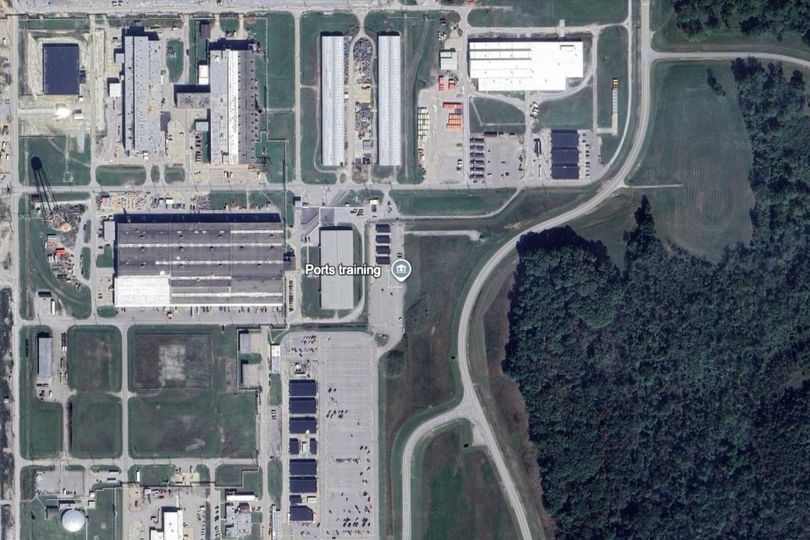
PORTS-Pike Technology Campus America’s Corridor for Digital Economy and Advanced Manufacturing Builds From Here -Credit:Google Earth
Officials say it will bring thousands of jobs and won’t raise local utility rates.
Hall isn’t convinced. “The whole ‘this is going to change everybody’s economic world around here’ has also never come to fruition because we still have an outrageous rate of poverty,” she says. “It always falls flat on its promises.”
A contaminated history
The site’s history, along with residents’ reports of high cancer rates, makes it harder to trust.
A 2025 study commissioned by the Scioto Valley-Piketon Council of Governments found that more than 50 properties near the plant had radioactive contamination exceeding the federal cancer-risk threshold.
The county health commissioner says the contamination is clear. The Ohio Department of Health disputes the danger, saying cancer rates are elevated across much of southern Ohio.
Pike County has one of the highest cancer rates in the state, according to Ohio’s 2025 cancer report – 544.4 deaths per 100,000 people compared to the statewide rate of 471.1 per 100,000.
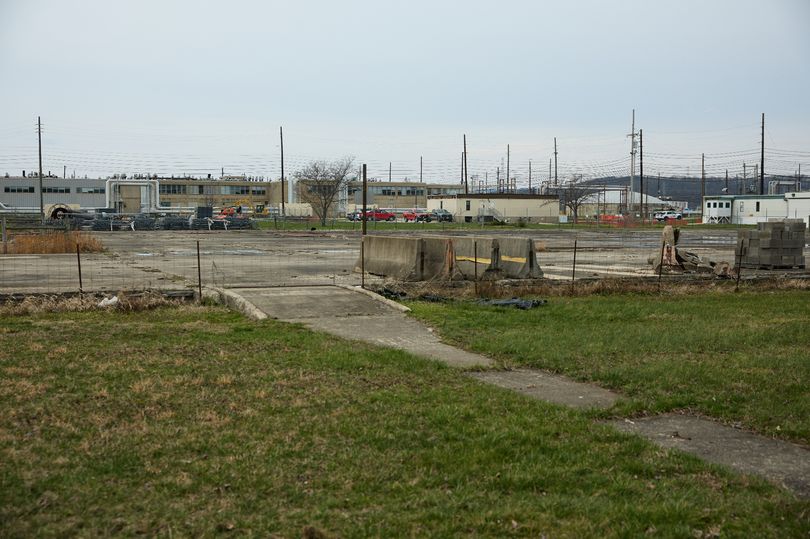
The Portsmouth Site in Piketon, Ohio, US, on Friday, March 20, 2026. SoftBank Group Corp. is working to deliver a data center-focused infrastructure project in Ohio so massive that Chief Executive Officer Masayoshi Son said it would channel $500 billion into a single campus. -Credit:Bloomberg via Getty Images
“This is the most contaminated place around here,” Darwin Pettit, a farmer whose property was one of the 50, told WKRC. Pettit lost his wife to cancer and his daughter to a seizure.
Jennifer Chandler, who chairs the local Council of Governments, told the outlet that about a dozen homes deemed too contaminated to live in have been sold for the gas plant. She called it “the best of both worlds.”
Hall described some of those sales as people leaving “unwillingly,” left with no choice because of where they’re situated.
“Pike County as a whole has just been dumped on,” Hall said, “and they feel like they’re just going to keep getting dumped on.”
“Nobody’s going to help me,” Pettit told WKRC.
Hall is concerned that building on the site could make things worse.
“A lot of people feel like if you leave it alone and let it lie, maybe it won’t cause as many problems, and it’s a construction site now,” she said.
“With the data center, the radiation threat does not go away just because we’ve changed the function on top of the ground.”
There are concerns that building on such a site would cause more health problems.
The campus is planned across private land and DOE land, according to the SB Energy spokesperson.
"DOE’s Office of Environmental Management is leading remediation at the former Portsmouth Gaseous Diffusion Plant, and SB Energy has committed to funding accelerated cleanup and remediation. SB Energy conducts thorough site reviews and due diligence, including soil sampling, and coordinates with relevant state and federal agencies as needed," the spokesperson said.
Spencer Dirrig, vice president of government affairs at the Ohio Environmental Council, told The Mirror U.S. the organization isn’t opposed to data centers but wants them held to account.

Chris Wright, US energy secretary, from left, Masayoshi Son, chairman and chief executive officer of SoftBank Group Corp., and Howard Lutnick, US commerce secretary, following a groundbreaking ceremony at the Portsmouth Site in Piketon, Ohio, US, on Friday, March 20, 2026. -Credit:Bloomberg via Getty Images
“In Piketon, Ohio, they are building the largest data center in the world and the largest natural gas plant in the United States right next door to power it on a decommissioned uranium plant site,” he said. “One hundred percent of that power will go to the data center, while the air pollution and environmental impacts go to the community.”
“While we want data centers on brownfields, we have to balance that with the true impact that those industries have had on those communities,” he said, “and we can’t make decisions based on areas being ‘too late to save.’”
SB Energy said the planned power generation will go through environmental and air-quality review and permitting and the company intends to use modern, efficient generation technology and meet applicable environmental requirements.
Changing landscape and politics
For generations, farmlands across Southern and Central Ohio cultivated corn, herded livestock, and passed family legacies. But across townships, a different story is unfolding: massive, energy-hungry campuses built to power artificial intelligence.
Hall, a third-generation farmer from Scioto Township in Jackson County, remembers an unexpected late-winter phone call to her parents’ farm at the end of February.
“A realtor called and said, 'We have a proposition, can you meet in an hour at the firehouse?'” She recalled that local farmers holding 100 or more acres of land were handed pre-typed letters of intent by shell companies and brokers offering $50,000 an acre—roughly ten times the going market rate—for swaths of prime agricultural land.
For a handful of families, the checks represent life-changing, generational wealth in regions long struggling under national poverty averages. But for everyone else, it felt like an existential threat engineered behind closed doors.
Advertisement
“Everything, this whole thing in Ohio feels like it's been done to us,” Hall said. “We weren't asked about this, we weren't notified of this, and we didn't have an opportunity before the ink was on the paper. This is all by design.”
Hall believes “it’s not a coincidence,” that big tech companies are buying farmlands to build hyperscale data centers at the same time when farmers across the state are struggling.
“There's no other way that you would get these people to turn on their cultures and their heritages except making it very, very hard to profit off the job that you have and then come in and offer them ten times market value for it,” Hall said.
The land was being purchased to build a data center. As of August, those who signed reported being told the deal is paused after AEP denied the permit, citing unavailability of power, Hall mentioned, who started the “No Data Centers in Jackson Ohio,” soon after the offers and hopes the community can pass zoning laws.
Megan Newton, who lives outside Waverly in Pike County, said a land acquisition firm hired by AEP, now operating as Ohio Power, contacted her husband’s family about a high-voltage line for the substation to power the PORTS data center.
“They approached us about an easement, so not a sale,” she said.
“It would take up multiple acres of the property,” Newton said, “you can't build under it or near it, so it would just take away some family land that could be used potentially for, say, future generations building homes on, or if anybody wanted to use it for agriculture purposes,” she added.
AEP and its contractor describe the plans as early-stage. Newton isn’t convinced.
“It’s hard to believe that when they’re already on our property, you know? ORC’s been on our property, came up to the door,” she said. “We still feel in the dark a lot of times on what’s actually happening.”
“If you don’t take the money, they are a utility company and have eminent domain,” Hall said. At AEP’s public hearings, she said, landowners got the runaround. “They want to wear you out by sending you left and right.”
As the data center expansions continue, so does opposition to them in the Republican-supporting region that overwhelmingly voted for Donald Trump in 2024. But feelings are beginning to change for a president who recently said the “only reason that communities throughout the U.S.A. should not want Data Centers is if they want to end up being backwards and poor.”
“I'm a registered Republican, my entire family are Republican, and we've been in local government since the 50s, always Republican. And my father is voting for the Democratic candidate for governor, and he's telling the other farmers. He's like, "I can't believe I'm saying this, but I'm going to vote for Amy Acton,” Hall said.
“No matter what walk of life you’re from—Republican or Democrat, old or young, rich or poor, and especially under 18—they hate data centers and the AI buildout,” she said. “I’m voting straight down the anti-data-center ticket whether that’s Republican or Democrat, and I think we’re going to have a purple election.”
Younger and first-time voters feel it too.
Shaylyn Toliver, 18, will vote for the first time this November.
“It’s a small town, and data centers are just going to bring in more people. I think it’s fine the way it is,” she said. “I’ve always kind of been on the left side, but everything that’s happening with data centers and AI will definitely affect the way I vote this year. I’m definitely going to go for the people that are against them.”
Ohio has more than 200 operational data centers with more than a couple of dozen proposed.
Dirrig said the tech companies are interested in developing in Ohio for “natural and manufactured reasons.”
“Naturally, we are a relatively flat state with a relatively low number of severe weather disasters, we have access to a large amount of clean, fresh water on Lake Erie, and we have a really skilled workforce of electrical and construction workers in Central Ohio,” he explained.
He cited the state government’s 100% sales tax exemption as the “manufactured reasons” attracting these companies.
In the early 2010s, Republican lawmakers established the tax exemption to lure tech companies to the state.
For facilities that cost $100 million or more to build, the exemption allows developers to waive up to 100% of Ohio’s 5.75% sales tax for up to 15 years.
The state estimated it would lose $136 million in sales tax revenue in FY 2025, but the actual loss was $1.6 billion.
“With savings of $1.6 billion in one year, major corporations take advantage of tax deals and the relatively unregulated space we have created while drawing back on home rule.
Adding local property tax exemptions to the sales tax exemption makes last year's $1.6 billion look more like $2.5 billion,” Dirrig told The Mirror U.S.
“Right now, we have a completely unregulated statewide environment,” Dirrig said.
He added that local communities with few part-time elected officials are expected to negotiate with big tech companies – a sentiment many across the counties visited by The Mirror U.S. expressed.
Brandon Bernard, a volunteer with Conserve Ohio, raised the alarm when a data center was proposed in his city, Pataskala.
The proposal, since then, has been rejected by the city council, and a litigation is ongoing.
Bernard seconded Dirrig’s call for statewide regulation, noting that currently tech companies are able to build hyperscale data centers in local communities “as long as these three people from the township or seven people from council agree, you can do whatever the hell you want to do.”
Is it worth the sacrifice?
Hall worries about what will be left.
“When technology changes and you can produce what takes 2,000 acres in a garage, where does that leave all of this?” she said. “Once you pave all this agriculture, it’s gone and will never return to fertile soil again.”
Newton asks a broader question. “With the way technology is moving, how long are data centers going to be relevant... Is it worth everything that you’d have to sacrifice to have them?”
Source: “AOL Money”
